Selasa, 24 Januari 2012

Penguin Book covers – part 2

This is part 2 of a 2-part post on paperback-book designs from Penguin Books. For background information on Penguin and for more covers see part 1 below. Over the years covers have been undertaken by many famous artists and designers - see Ben Shan, Eduardo Paolozzi, Paul Hogarth, and Milton Glaser (originator of the 'I [heart] NY' logo). Where known, I have shown the date of publication and name of the designer/illustrator:

1970 Tony Meeuwissen

1971 Donna Brown

1971 Milton Glaser

1971 Minale/Tattersfield/Provinciali

1971 Omnific

1972 David Pelham

1973 (unknown)

1973 Tony Meeuwissen
The above design is a clever take on the iconic design of the British cigarette packet for "Wild Woodbine":


1974 (unknown)

1976 Tony Meeuwissen

1977 Ben Shahn

1977 John Carrod (& Harry Beck, designer of the original tube map)

1978 Paul Hogarth

1983 Carroll & Dempsey

1999 Pentagram

2008 (unknown)

2008 (unknown)

2008 (unknown)

(unknown)

(unknown)

(unknown)

(unknown)


Minggu, 22 Januari 2012

Penguin Book covers – part 1

I’ve been concentrating on painters for quite a while now, so thought I’d take a look at something a little different today – some graphic design featuring iconic and quintessentially British paperback-book cover designs, all from Penguin Books.

Penguin Books is a publisher founded in 1935 by Sir Allen Lane and V.K. Krishna Menon. Penguin revolutionised publishing in the 1930s through its high quality, inexpensive paperbacks, sold through Woolworths and other high street stores for sixpence. Penguin's success demonstrated that large audiences existed for serious books. Penguin also had a significant impact on public debate in Britain, through its books on politics, the arts, and science. Penguin Books is now the flagship imprint of the worldwide Penguin Group.

In 1935, if you wanted to read a good book, you needed either a lot of money or a library card. Cheap paperbacks were available, but their poor production generally tended to mirror the quality between the covers.

 Penguin paperbacks were the brainchild of Allen Lane, then a director of The Bodley Head publishing house. After a weekend visiting Agatha Christie in Devon, he found himself on a platform at Exeter station searching its bookstall for something to read on his journey back to London, but discovered only popular magazines and reprints of Victorian novels.

Appalled by the selection on offer, Lane decided that good quality contemporary fiction should be made available at an attractive price and sold not just in traditional bookshops, but also in railway stations, tobacconists and chain stores. He also wanted a 'dignified but flippant' symbol for his new business. His secretary suggested a Penguin and another employee was sent to London Zoo to make some sketches. Seventy years later Penguin is still one of the most recognizable brands in the world.

The first Penguin paperbacks appeared in the summer of 1935 and included works by Ernest Hemingway, André Maurois and Agatha Christie. They were colour coded (orange for fiction, blue for biography, green for crime) and cost just sixpence, the same price as a packet of cigarettes. The way the public thought about books changed forever - the paperback revolution had begun.

"We believed in the existence in this country of a vast reading public for intelligent books at a low price, and staked everything on it" Allen Lane

Penguin became a separate company in 1936 and set up premises in the Crypt of the Holy Trinity Church on Marylebone Road, London, using a fairground slide to receive deliveries from the street above. Within twelve months, it had sold a staggering 3 million paperbacks. Traditional publishers tended to view Penguin with suspicion and uncertainty, as did some authors. The rest, as they say, is history.

I have chosen covers that show a broad spectrum of Penguin's output over the years (I have done at least half a dozen covers for Penguin myself, as have other painters - see Duncan Grant, Peter Blake and Alan Jones below). Where possible I have shown the date of publication and the designer/illustrator's name:

1946 (unknown)

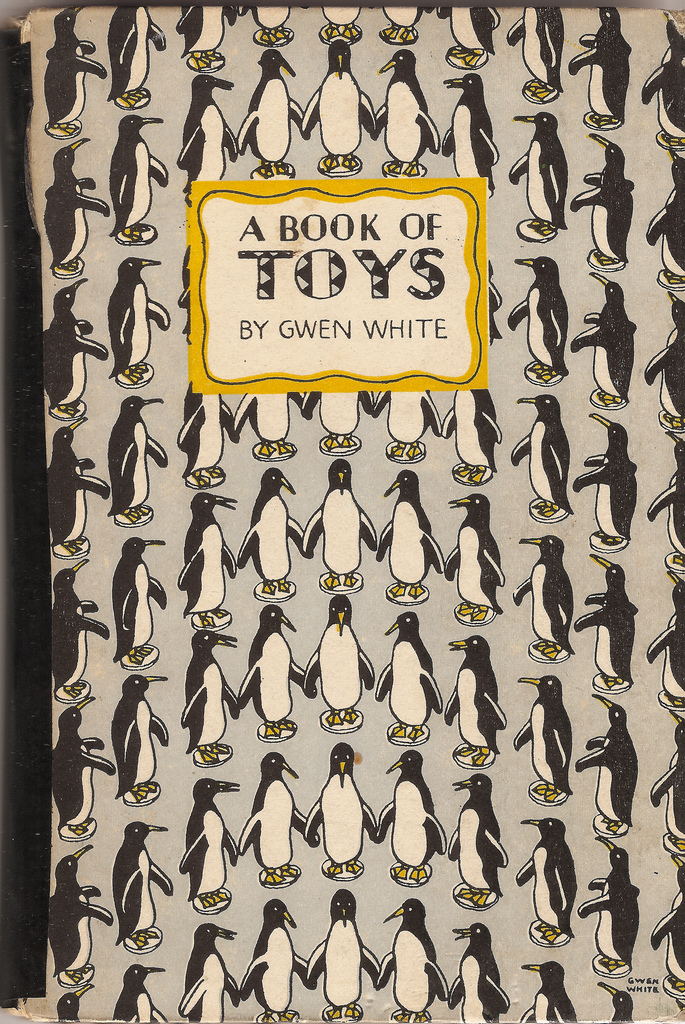
1946 Gwen White

1953 (unknown)

1957 David Caplan

1958 David Caplan

1960 Erwin Fabian

1960 John Astrop

1960 Saul Bass

1962 John Sewell

1964 Anne Usborn

1964 Duncan Grant

1965 Peter Blake (a rather worn copy from my own collection)

1965 Raymond Hawkey

1966 Lou Klein

1966 Ross Cramer

1968 Alan Spain

1968 Michael Levey

1969 Alan Jones

1970 Harry Willock

1970 Jack Yates

(unknown)

(unknown)
More covers in Part 2.

Jumat, 20 Januari 2012

Anna Ancher - Danish painter

Having recently featured the work of Danish-born artist Soren Emil Carlsen (1853 – 1932), I thought I’d take a look at the work another Danish painter who was a contemporary, Anna Ancher (1859 – 1935). Ancher is associated with the ‘Skagen Painters’, an artist’s colony in the very north of Jutland.

She was born Anna Kirstine Brøndum in Skagen, Denmark, the daughter of Erik Andersen Brøndum (1820–1890) and Ane Hedvig Møller (1826-1916). She was the only one of the Skagen Painters who was actually born and grew up in Skagen where her father owned the Brøndums Hotel. The artistic talent of Anna Ancher became obvious at an early age and she grew acquainted with pictorial art via the many artists who settled to paint in Skagen.

While she studied drawing for three years at the Vilhelm Kyhn College of Painting in Copenhagen, she developed her own style and was a pioneer in observing the interplay of different colours in natural light. She also studied drawing in Paris at the atelier of Pierre Puvis de Chavannes along with Marie Triepcke, who would marry Peder Severin Krøyer, another Skagen painter. In 1880 she married fellow painter Michael Ancher, whom she met in Skagen. They had one daughter, Helga Ancher. Despite pressure from society that married women should devote themselves to household duties, she continued painting after marriage.

Danish 1000 Kroner note issued in 1998 featuring Anna & Michael Ancher
 Anna Ancher is considered to be one of the great Danish pictorial artists by virtue of her abilities as a character painter and colourist. Her art found its expression in Nordic art's modern breakthrough towards a more truthful depiction of reality, e.g. in Blind Ane (1882) and The Girl in the Kitchen (c1883–1886).

1882 Blind Ane (Ane Chrestense Nielsdatter) oil on canvas 51 x 40 cm

c1883-6 Girl in the Kitchen
 Ancher preferred to paint interiors and simple themes from the everyday lives of the Skagen people, especially fishermen, women and children. She was intensely preoccupied with exploring light and colour. She also created more complex compositions such as A Funeral (1891). Anna Ancher's works have often represented Danish art abroad. She was awarded the Ingenio et Arti medal in 1913 and the Tagea Brandt Rejselegat in 1924.

1891 A Funeral oil on canvas 104 x 125 cm
 Note: Sizes where given have been rounded up or down to the nearest whole centimetre

1880 Old Man Whittling a Stick oil on wood 39 x 29 cm

c1880-1925 In the Flower Garden oil on canvas 29 x 24 cm

c1880-1925 Little Girls with a Cod oil on canvas 81 x 63 cm

c1880-1925 Seated Woman Braiding her Hair oil on masonite 27 x 22 cm

1883 (Plucking Seagulls) oil on canvas 66 x 11 cm

1883 A Blind Woman in her Room oil on canvas 59 x 47 cm

c1885 A young Girl Arranging Flowers oil on canvas 56 x 41 cm

1886 Fischer Kræn Wollesen mending nets pastel 52 x 41 cm

1886 Tine, a Young Girl from Skagen oil on wood 27 x 28 cm

c1888 Evening Prayer oil on canvas 68 x 60 cm

1890 (Sewing Fishing Nets) oil on canvas 59 x 48 cm

c1890 Old Woman Resting pastel 29 x 39 cm

1891 Sunlight in the blue room oil on canvas 65 x 59 cm

1900 A Young Girl Plucking a Swan oil on canvas 87 x 75 cm

1904 Plucking the Christmas Goose oil on canvas 55 x 67 cm

1905 Interior with Poppies and Woman Reading oil on canvas 56 x 65 cm

1905 The Little Brother oil on canvas 69 x 62 cm

1908 Breakfast before the Hunt (Michael Ancher) oil on canvas 49 x 57 cm

1910 Interior with Woman Sewing oil on canvas

1910 Two Girls in  Sewing Lessons oil on canvas 63 x 54 cm

c1914 At Lunchtime oil on canvas 62 x 51 cm